Fortress
Every fortress is built around something worth protecting. In Fortress, that something is absence — a central void that the surrounding planes lean toward, orbit, refuse to fill. The soda-fired ceramic forms interlock at the perimeter, silvered and angular, architectural in their logic.
But a courtyard cuts both ways. The same walls that keep the outside out keep the inside in. Fortress lives in that tension — enclosure as sanctuary, enclosure as constraint. The center open, the boundary absolute, the difference between safety and captivity a matter of where you're standing.
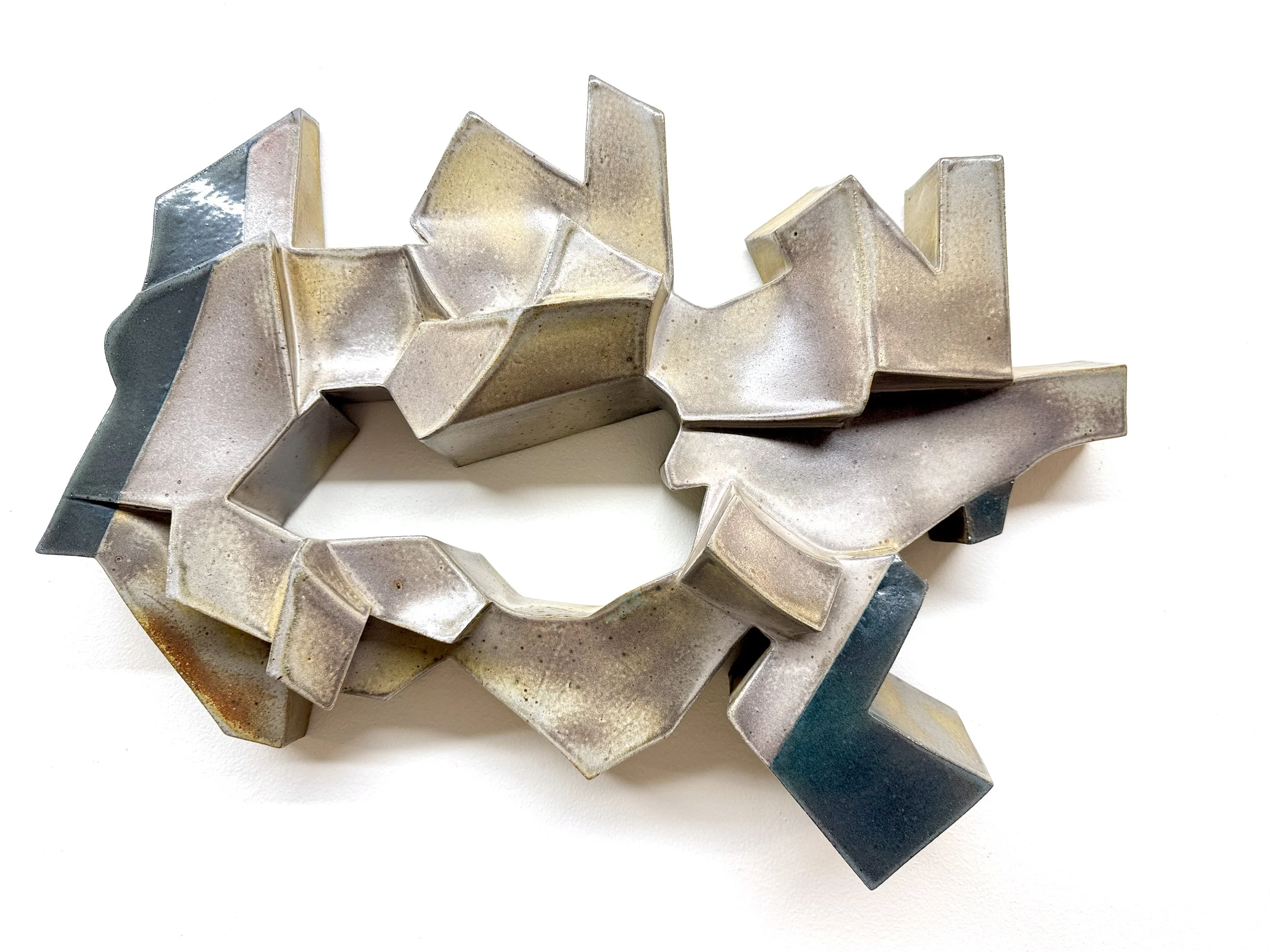
This ceramic work, much like my Emergent Architectures, is created through a piece-by-piece planar development, differing through their interaction with a metal armature.
Specimen no. 1
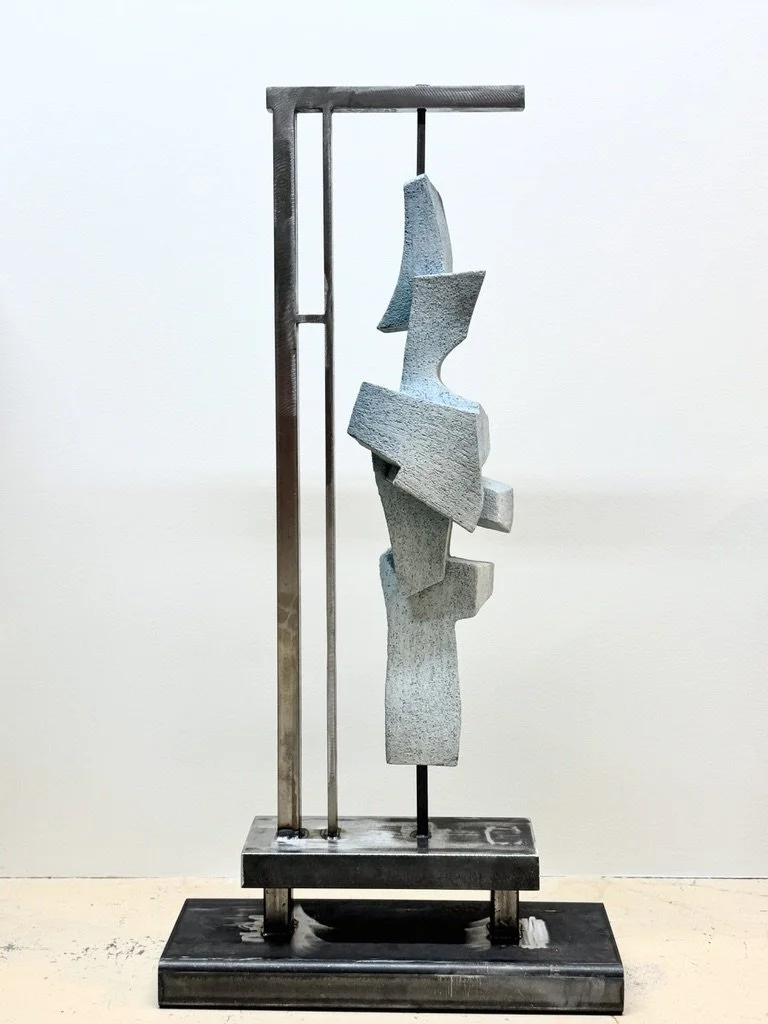
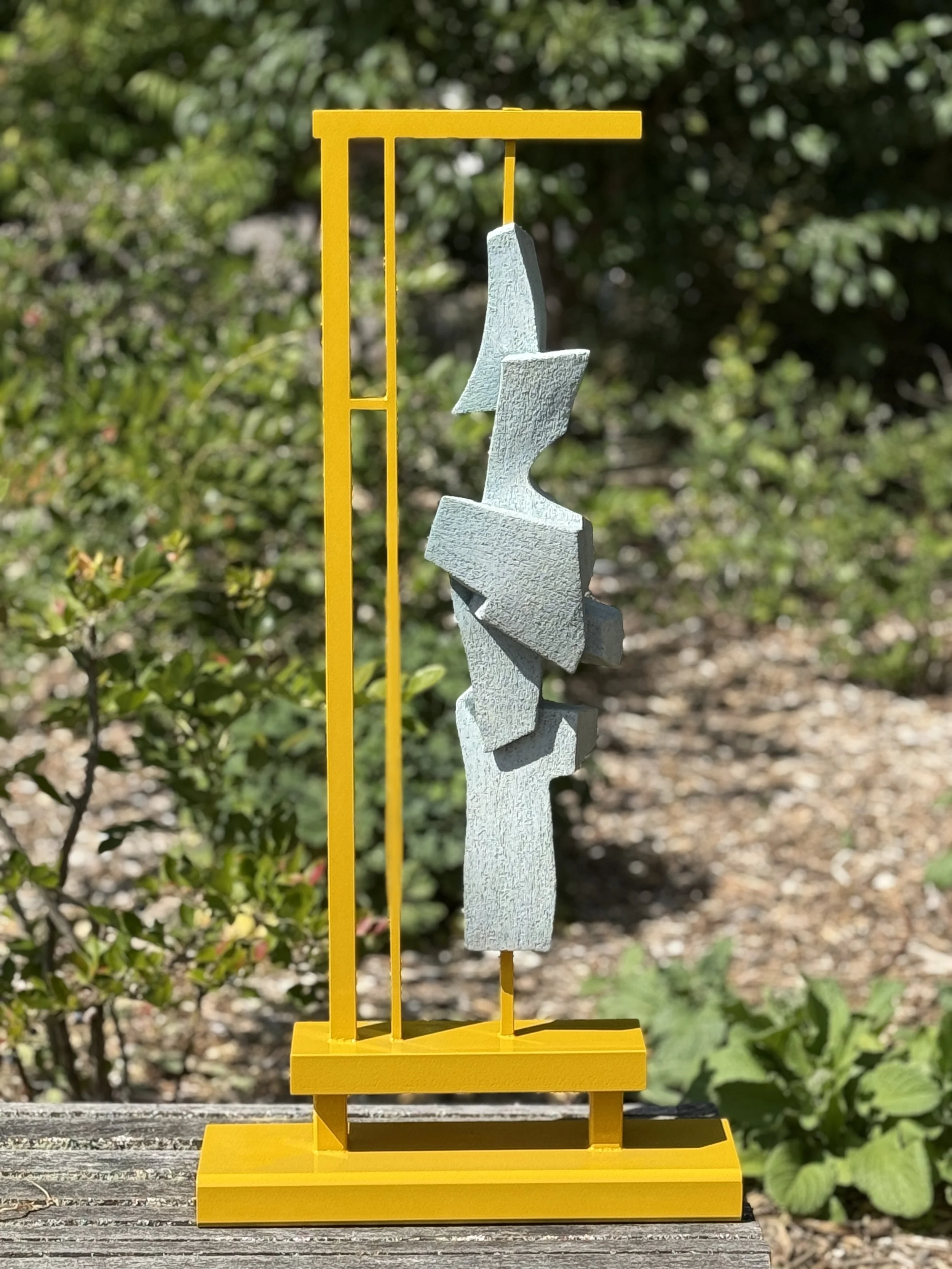
There's a particular kind of relationship between a thing and whatever was built to hold it. The holder is precise, purposeful, certain of its role. The held thing is something else — accumulated, textured, arrived at rather than designed. It preceded the frame and will outlast the need for one.
The yellow gantry in Specimen No. 1 is beautiful in exactly that way. It knows what it is. It holds the ceramic upright, offers it to the room, asks nothing in return. The ceramic, scraped and planar and patient, simply receives that attention — and remains, as it always was, the thing the whole structure was built around. Before and after powder coating.
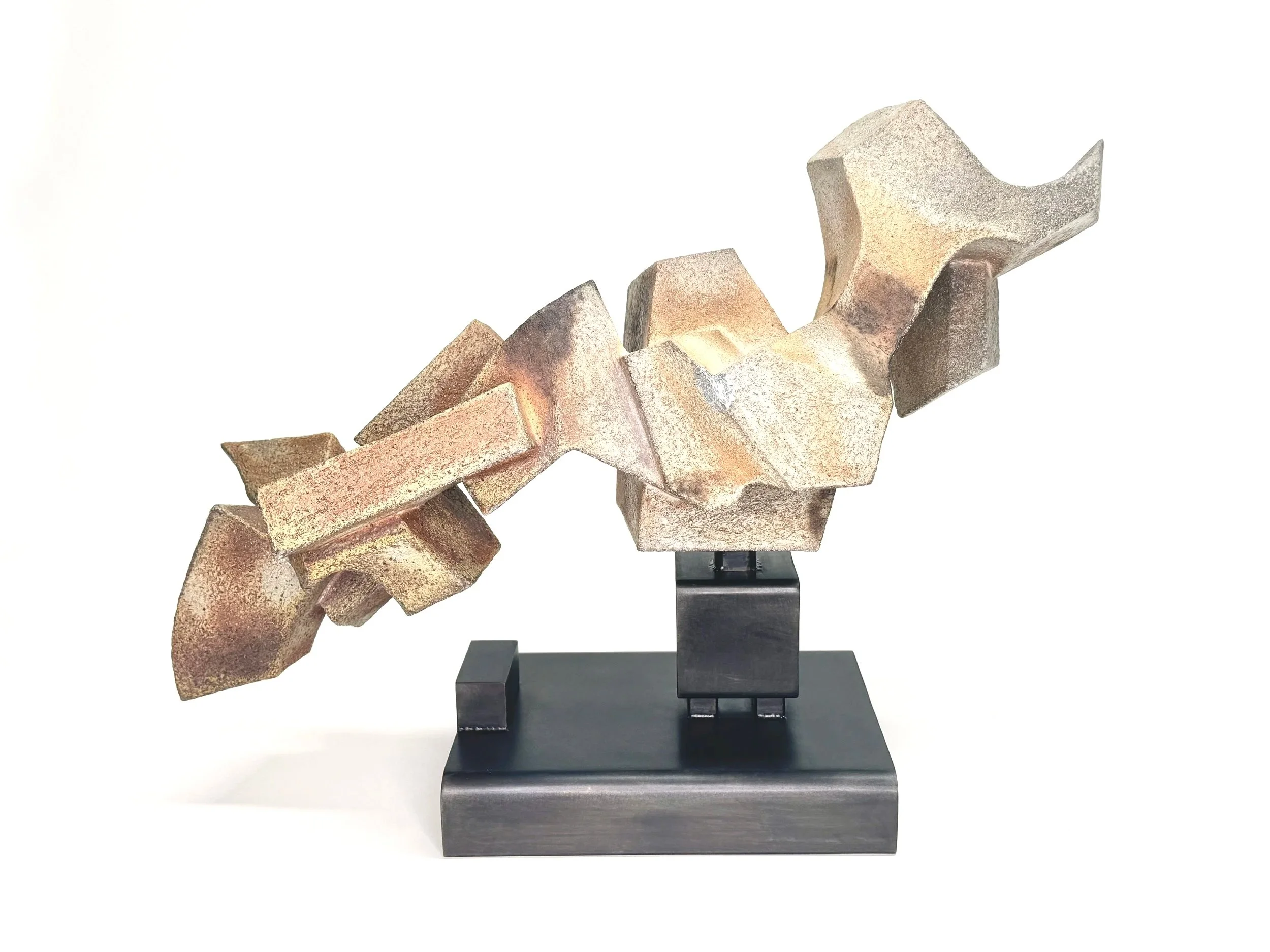
In geology, a subhedral crystal forms partly freely and partly under constraint. Subhedral Interior uses this idea as a metaphor for consciousness. The ceramic structure accumulates irregular planes like mineralogical formation, suggesting an interior shaped by pressure, time, and experience. The machined steel base anchors this growth within the stable conditions of the physical world, presenting the self not as a fixed form but as a structure continually shaped by its environment.
Heterarchic Formation
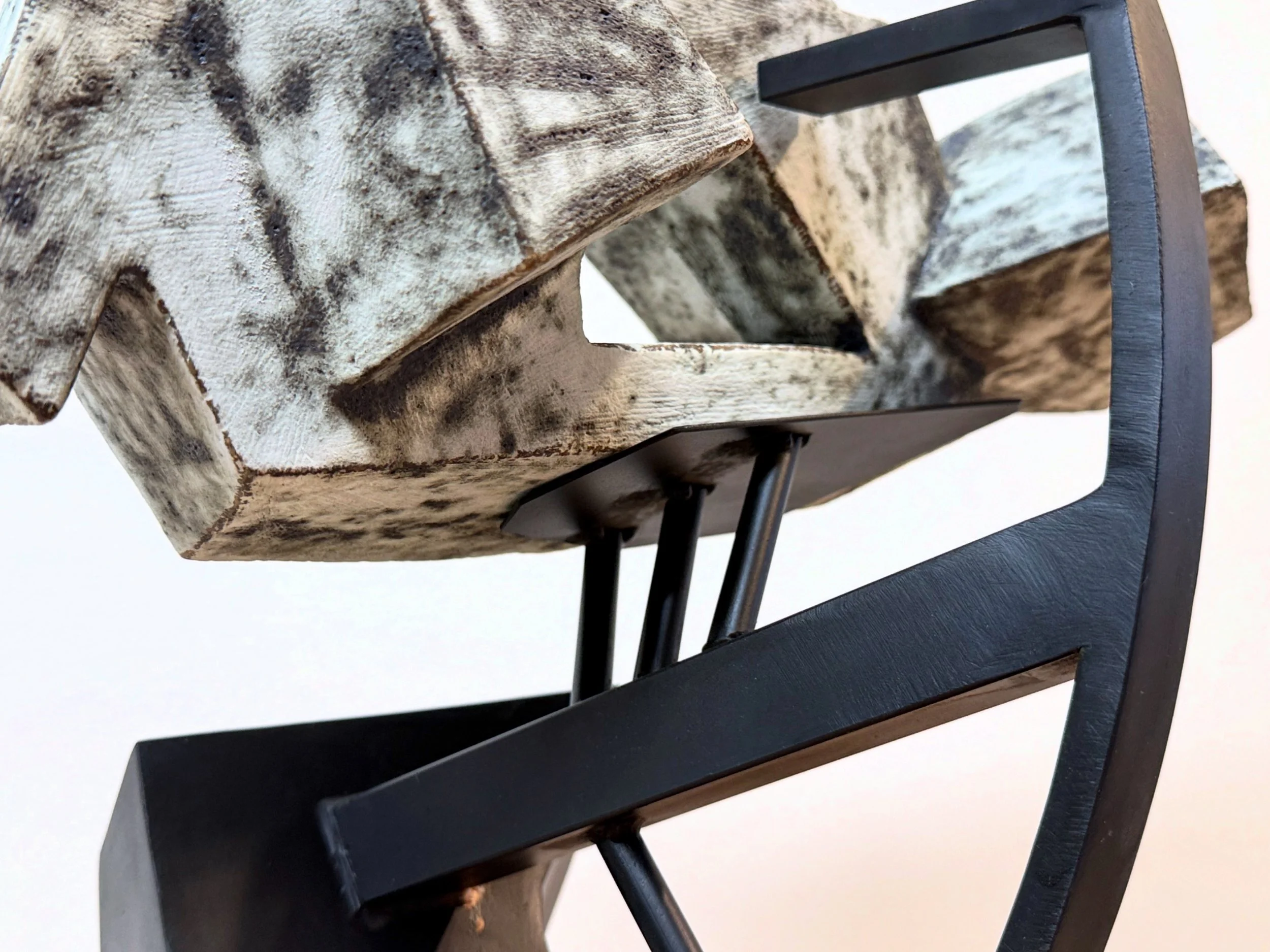
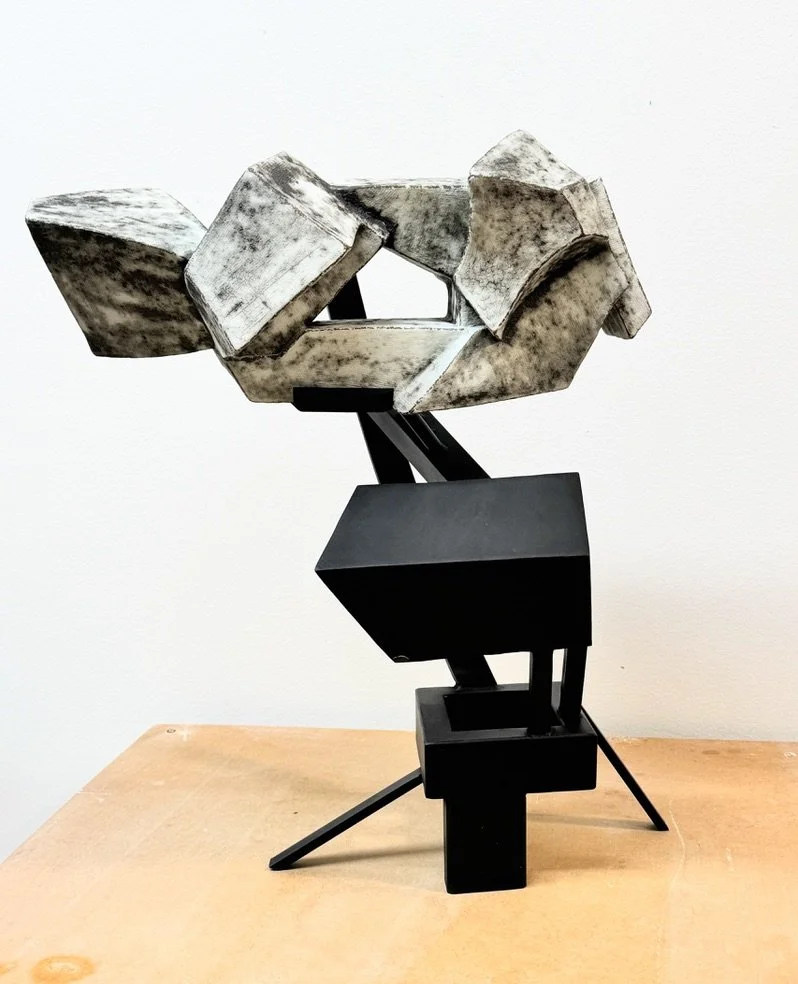
Ceramic and metal occupy the same formal logic here — planar, accumulative, weighted. The boundary between them is real but not hierarchical. This piece lives in that seam.
Selenian Architecture
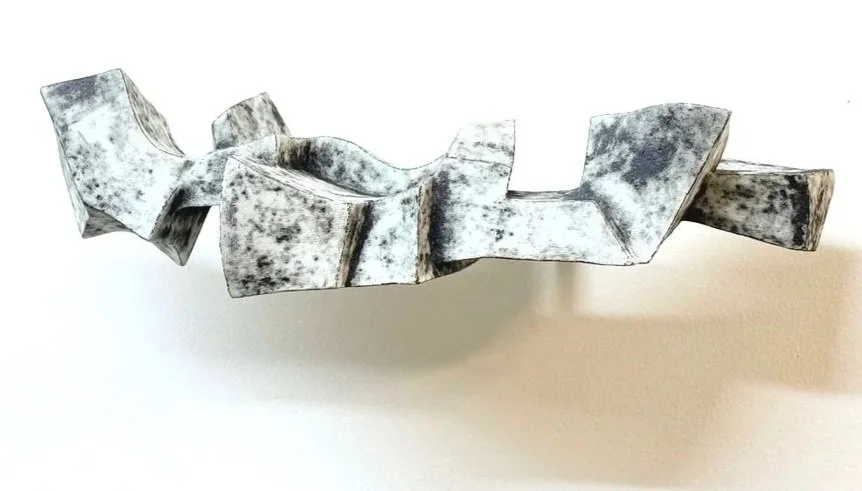
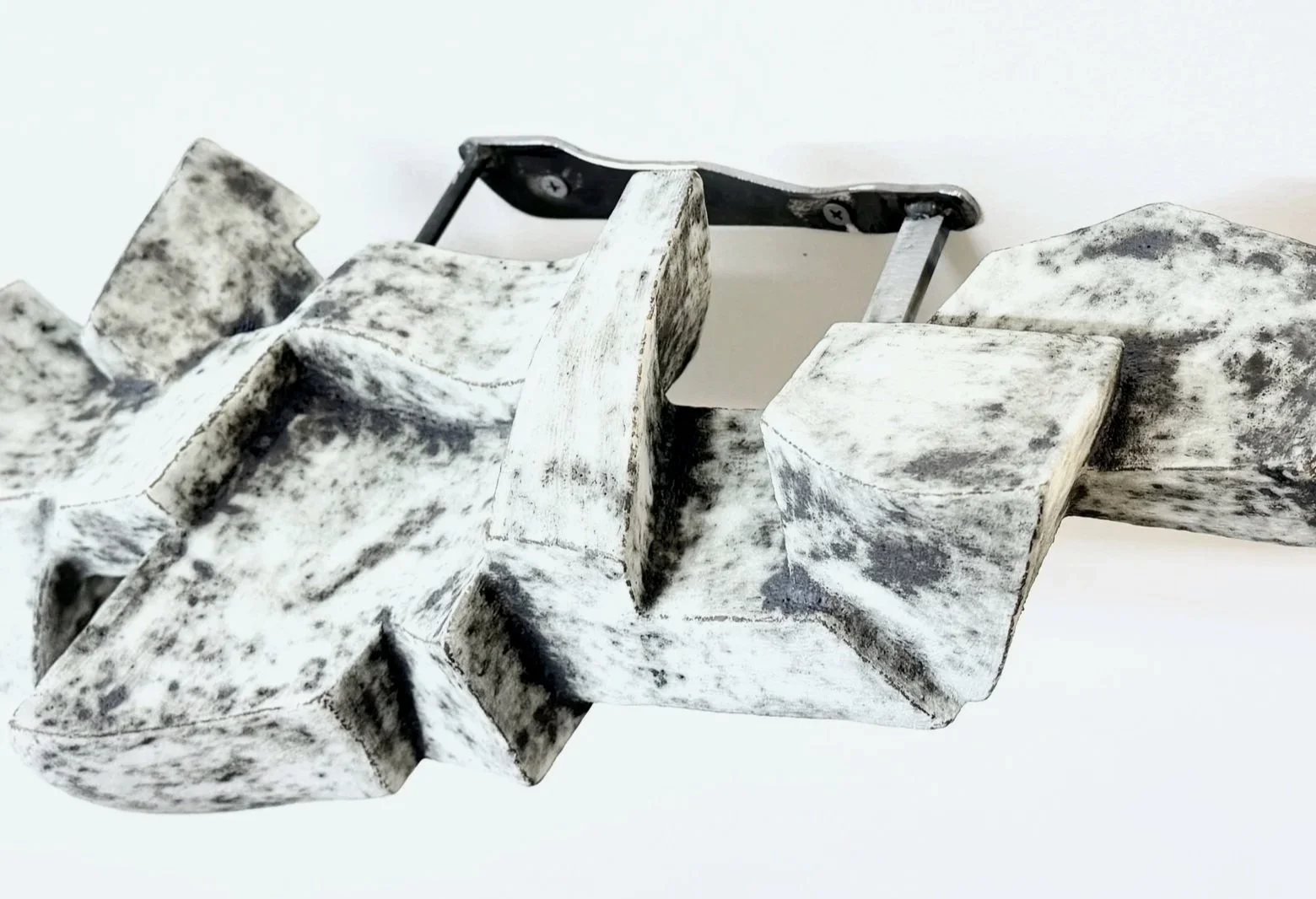
The moon has no weather. Its surface is unchanged by wind or water — only impact, only time. Selenian Architecture draws from that stillness: a wall-mounted ceramic landscape whose surface carries the white-gray palette and cratered texture of the lunar highlands. Suspended by a cleat invisible from most angles, the piece refuses its own weight, hovering at the threshold between terrain and object.
Subhedral Interior
Island Chains
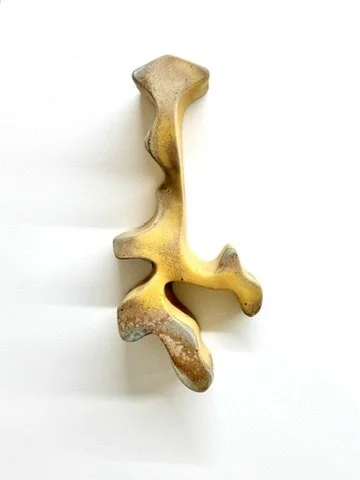
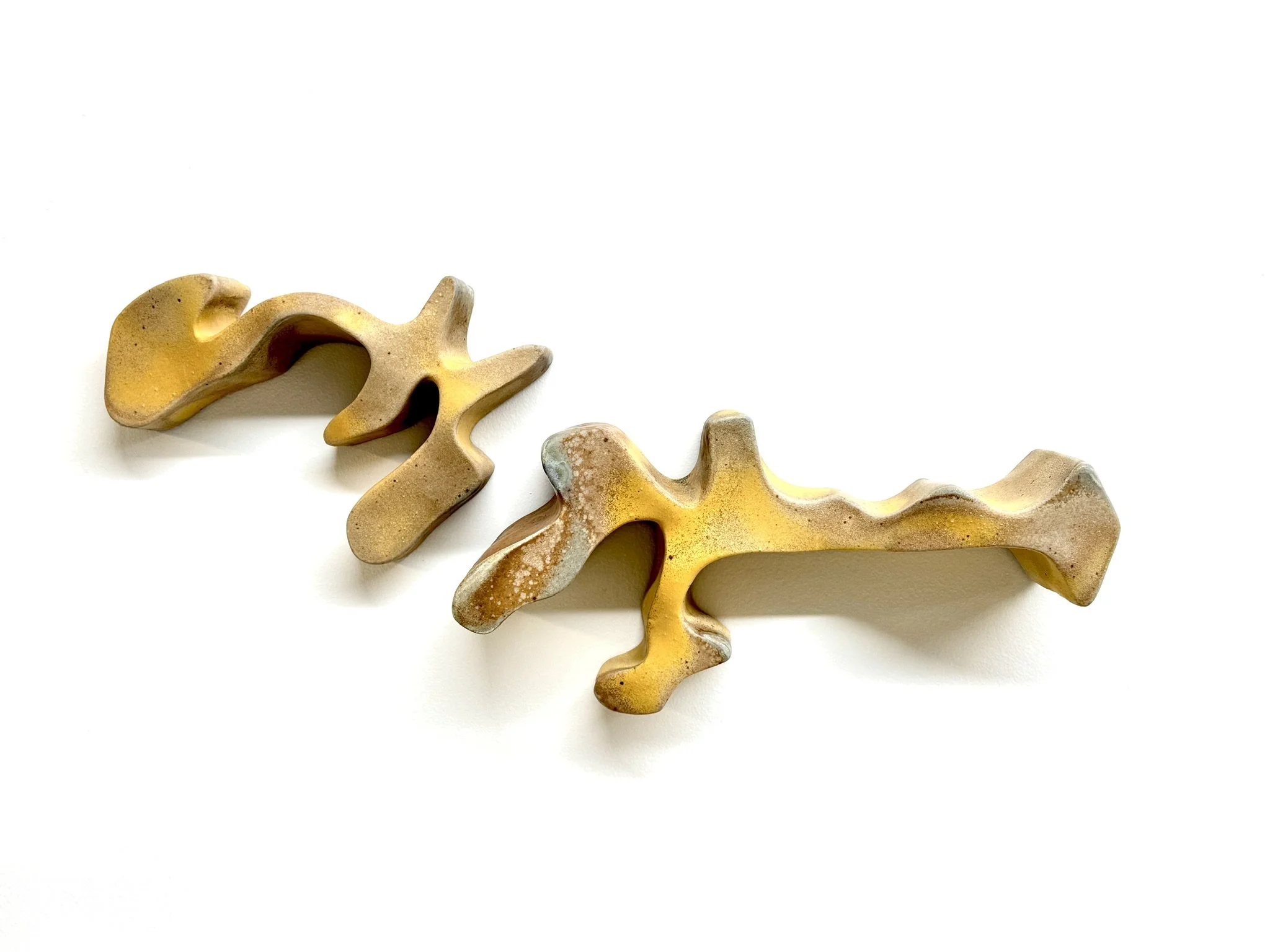
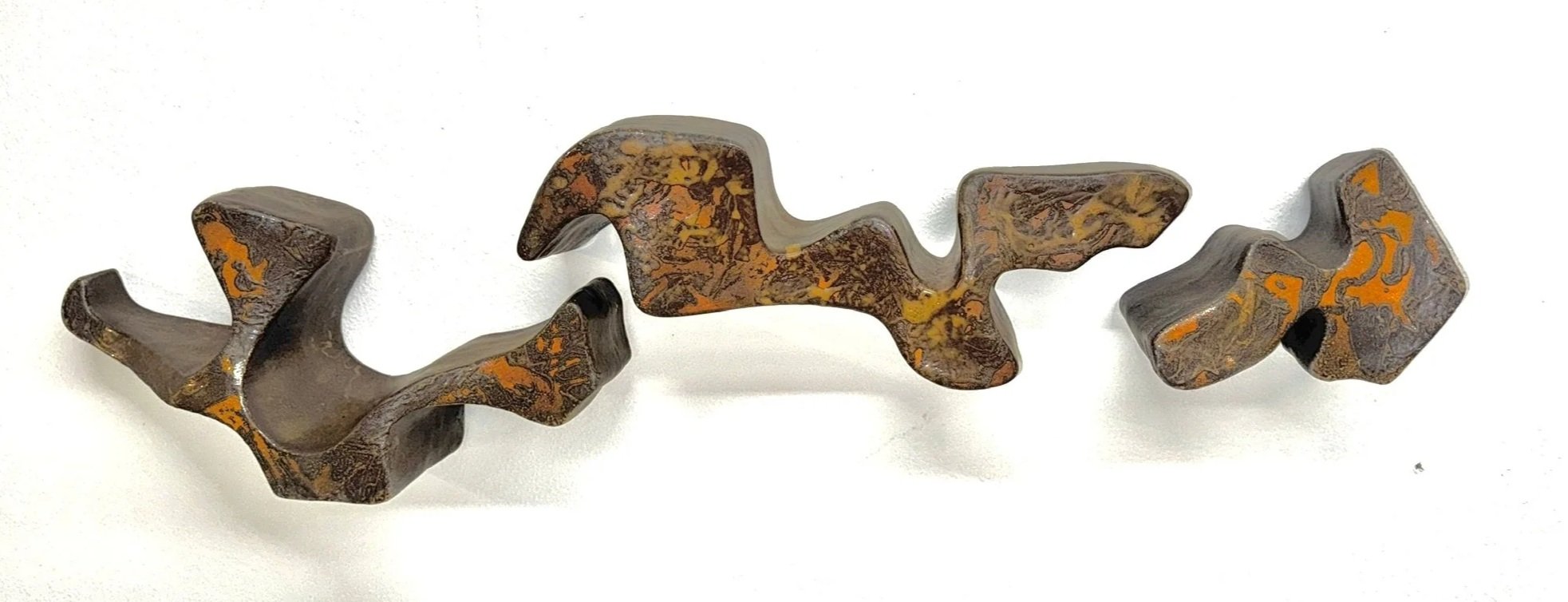
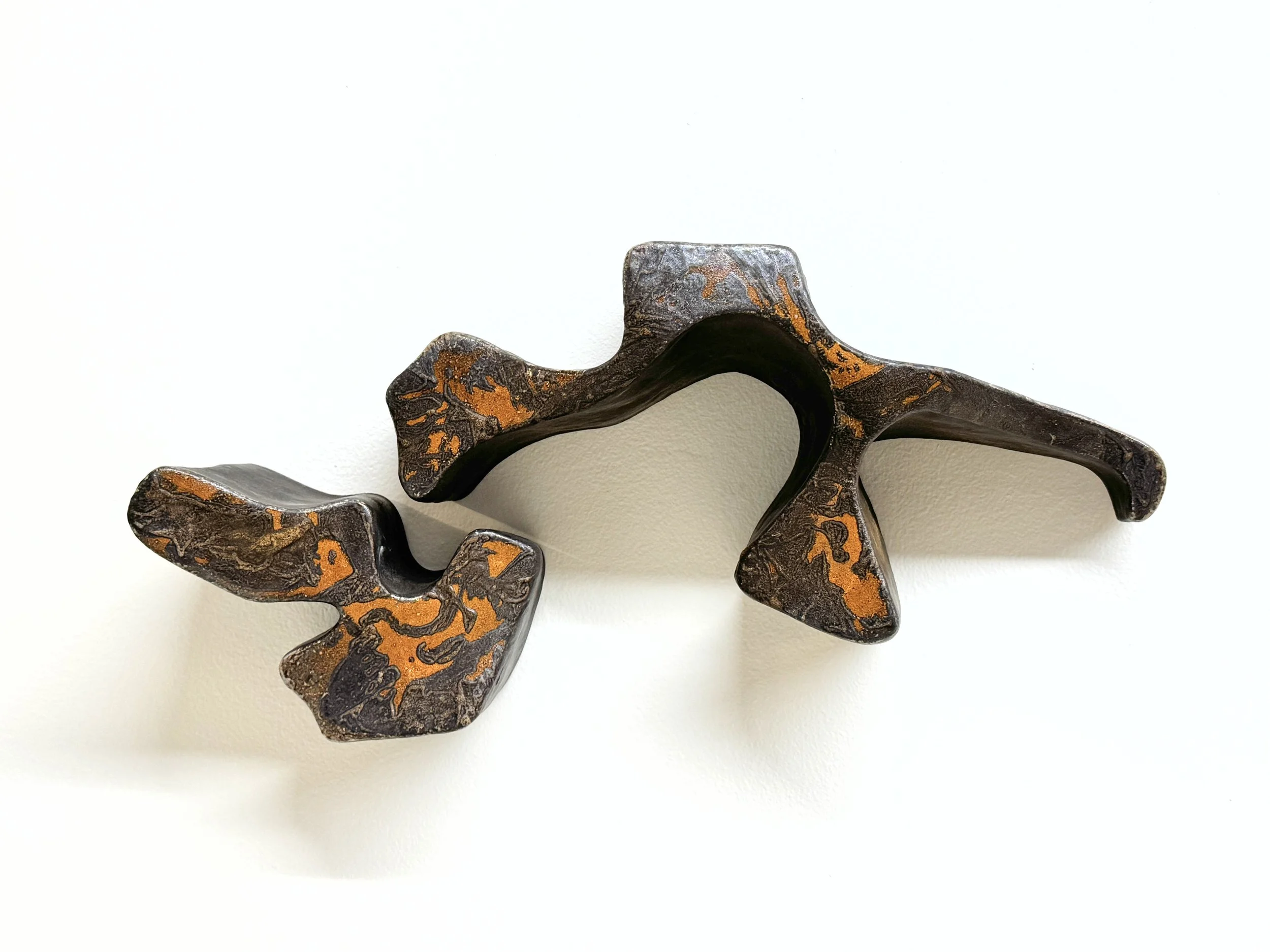
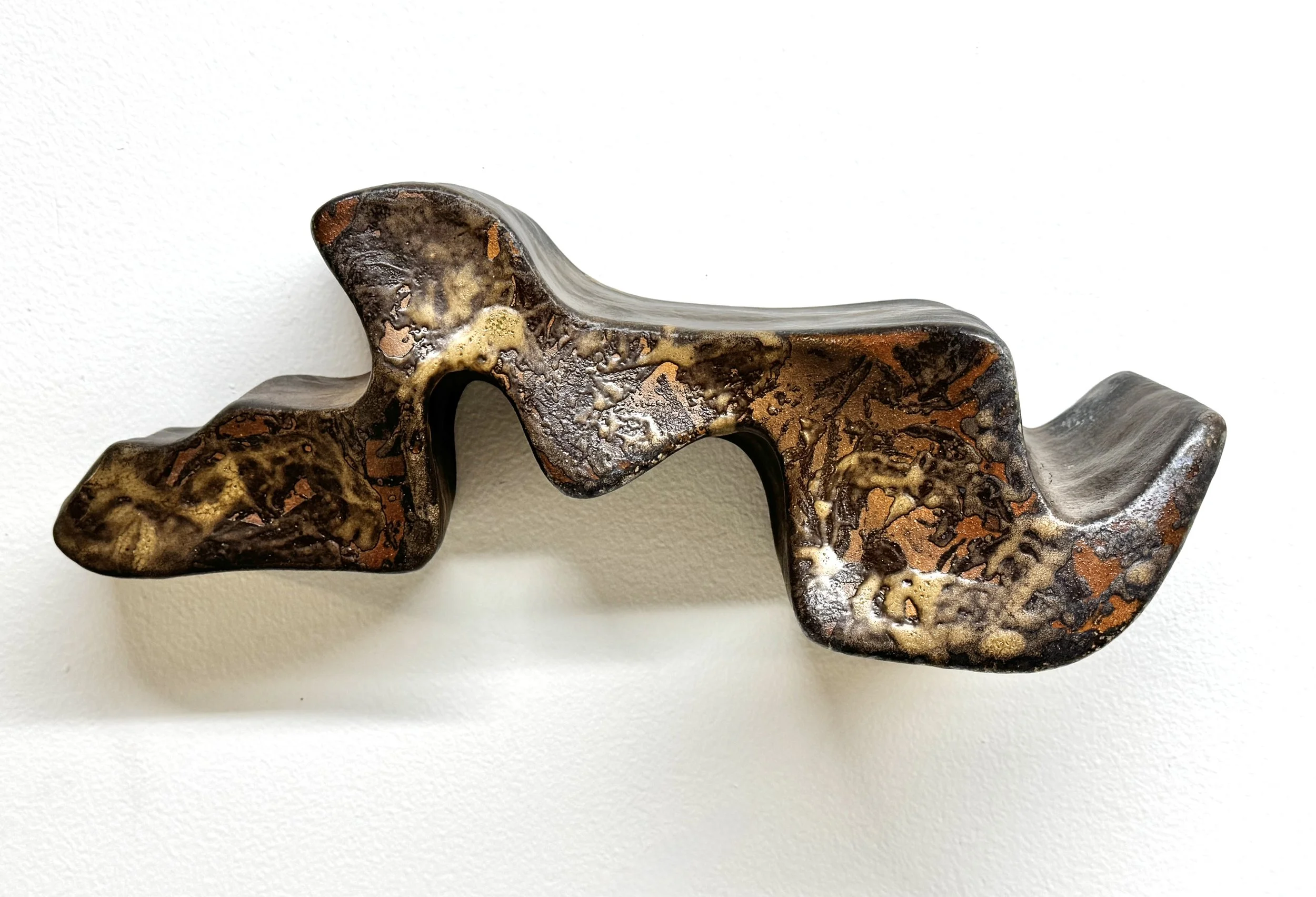
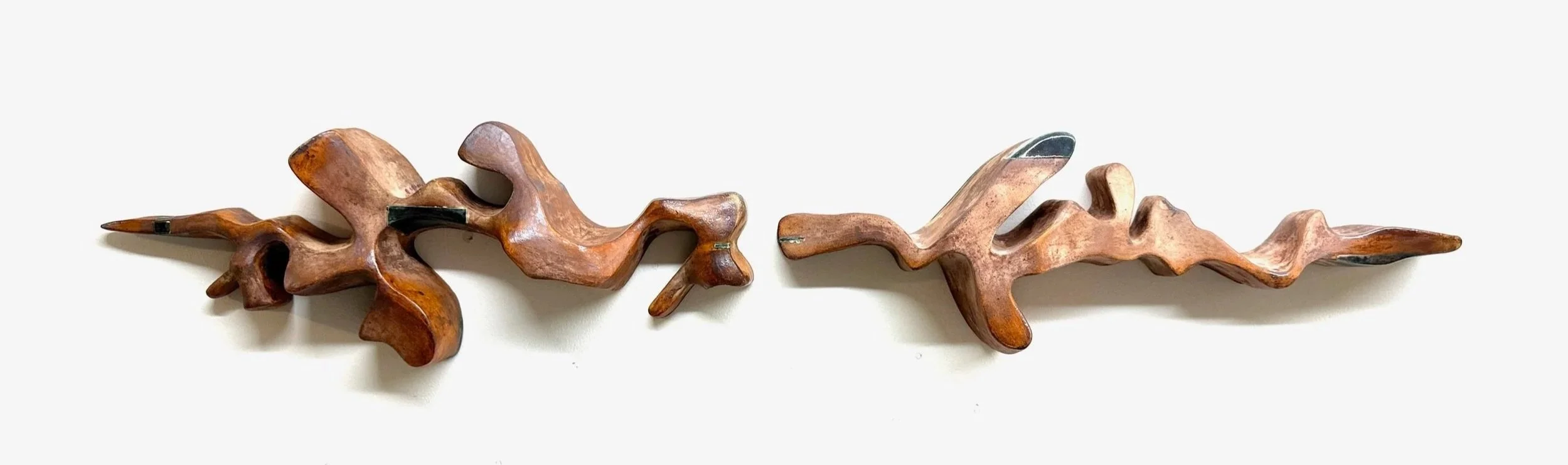
The Island Chains series emerged from an interest in adjacency — how forms relate across distance, what the gap between things holds or loses. Each ceramic piece is soda fired at cone 6, its surface marked by the kiln's atmosphere: flashing, pooling, recording the specific conditions of a single firing.
The modular works are intentionally open. Their arrangement shifts, the channels between them negotiable, no configuration more correct than another.
The mahogany pair carries a glazed line across both bodies. Separated, it is incomplete. Brought to the right horizon, it resolves — a continuity that was always there, waiting for the distance to be right.